Nature and Landscape Photography in Utah
Utah is a nature and landscape photographers dream. From the vast red rock deserts of the south to the northern forests and towering mountains, from the certified dark night skies, to the plentiful wildlife, Utah has something for every person wanting to photograph or purchase nature photography prints.
Utah is the 13th largest state in the USA and has about the same square miles as the United Kingdom. The area now encompassing Utah was annexed into the USA in 1848 after the Mexican-American War. Utah was granted statehood in 1896 and became the 45th state.
Utah has five National Parks (Arches, Bryce Canyon, Canyonlands, Capitol Reef, and Zion), nine National Monuments (Cedar Breaks, Dinosaur, Grand Staircase–Escalante, Hovenweep, Natural Bridges, Bears Ears, Rainbow Bridge, Timpanogos Cave, and Jurassic), two national recreation areas (Flaming Gorge and Glen Canyon), seven national forests (Ashley, Caribou-Targhee, Dixie, Fishlake, Manti-La Sal, Sawtooth, and Uinta-Wasatch-Cache), and numerous state parks and monuments.
A person can drive from Logan in northern Utah to Saint George in southern Utah in about 6 hours on Interstate 15 and from Wendover in western Utah to Evanston just east of the Utah Wyoming border on Interstate 80 in about 3 hours. This accessibility makes Utah an optimal place to see and photograph many different areas in a relatively short time.

Zion National Park
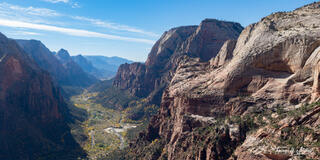
Between 4-5 million people visit Zion National Park each year. This park is the gem of Utah and one of the most photographed places in the state. Zion National Park is located near the town of Springdale, Utah and has plenty of accommodations if booked in advance. Zion is only about a 1 hour drive from Saint George. Photographing in Zion is all about waiting for the light and looking for interesting perspectives. Make sure to scout for locations ahead of time and then return when the light is better.
The Kolob Canyons area of Zion National Park, pictured above, is one of my favorite places because it is less crowded. The towering cliffs of Kolob are truly amazing especially when you hike below them and see how tall those really are.

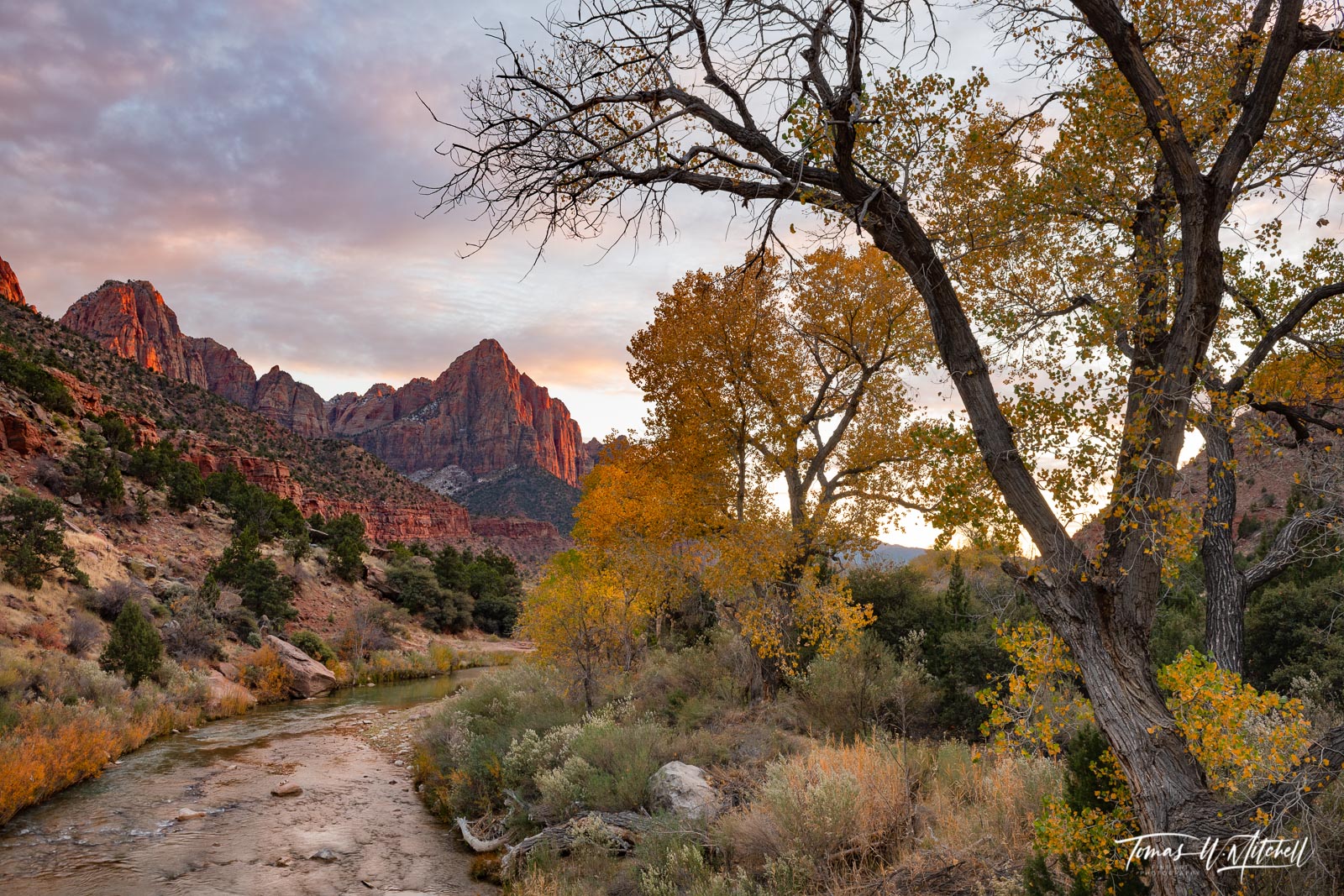
A very popular feature in Zion National Park is the Watchman mountain pictured above. This 6,555 foot mountain towers over the entrance to the park and the Watchman Campground.
Make sure to spend multiple days in the Park scouting and exploring to find the perfect light and compositions. Great photography takes leg work and in places like Zion this involves plenty of hiking. So be prepared with good boots and socks and make sure to take plenty of water.
Here is a video I did while photographing in Zion National Park.
Kodachrome Basin State Park
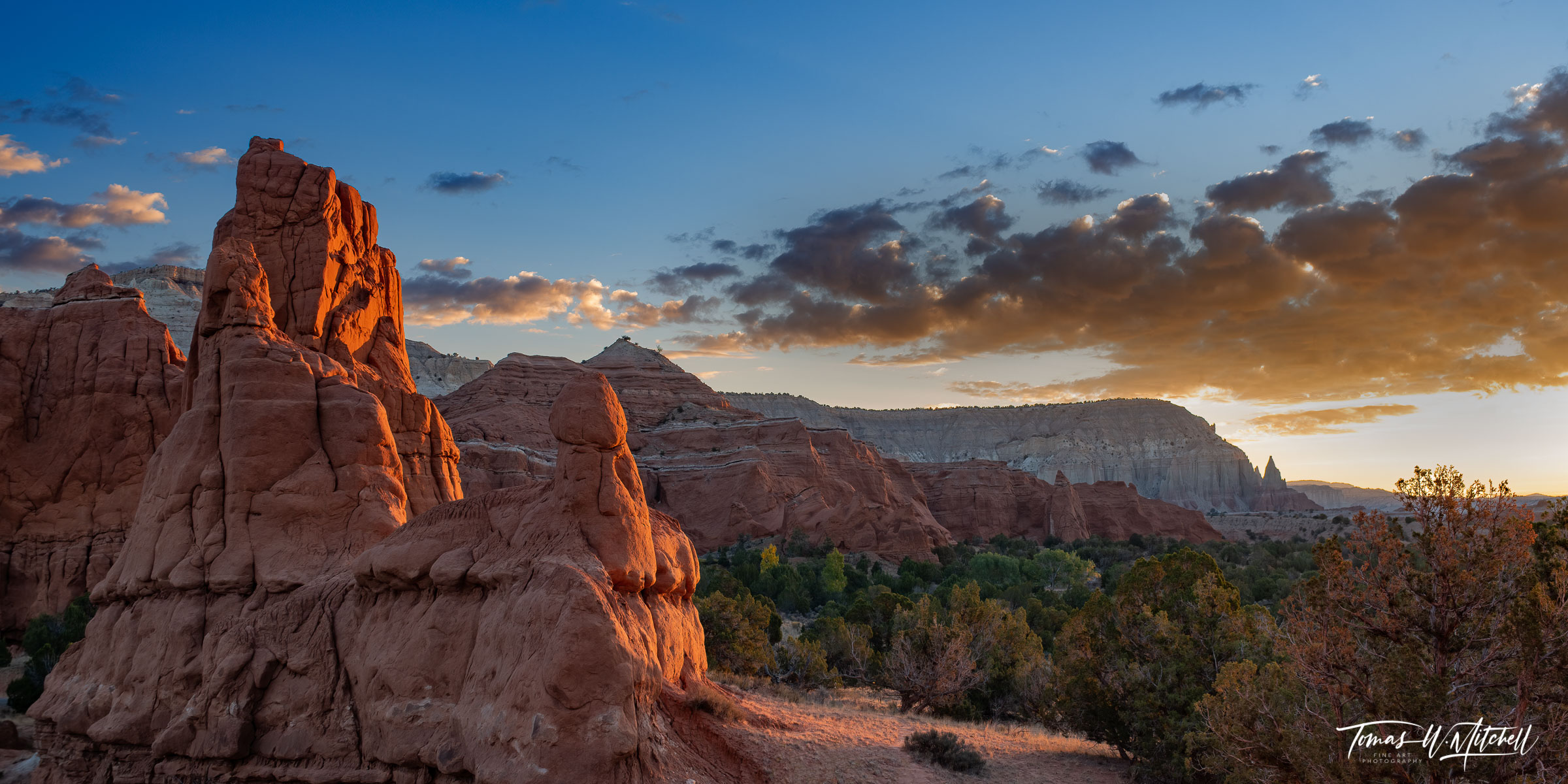
One of my favorite state parks in Utah is Kodachrome Basin. This little known park near Bryce Canyon National Park has amazing sandstone spires and beautiful hiking trails. This park received its name by National Geographic photographers who photographed it in 1948. They named it Kodachrome Flat after the Kodak film known for its vibrant, bright colors.
Kodachrome Basin State Park has great camp grounds and bathrooms but make sure to book well in advance because they fill up quick. My favorite time to visit this park is in early spring or late fall. Winter in the park can even be amazing though the nights can get very cold. Try to time your photography adventures to when temperatures will be enjoyable because the deserts of Utah can get dangerously hot during the day. Carrying your camera gear in a backpack is best because you can also carry water and snacks. My favorite trail in Kodachrome Basin is the Grand Parade Trail but I also really enjoy the Panorama Trail.
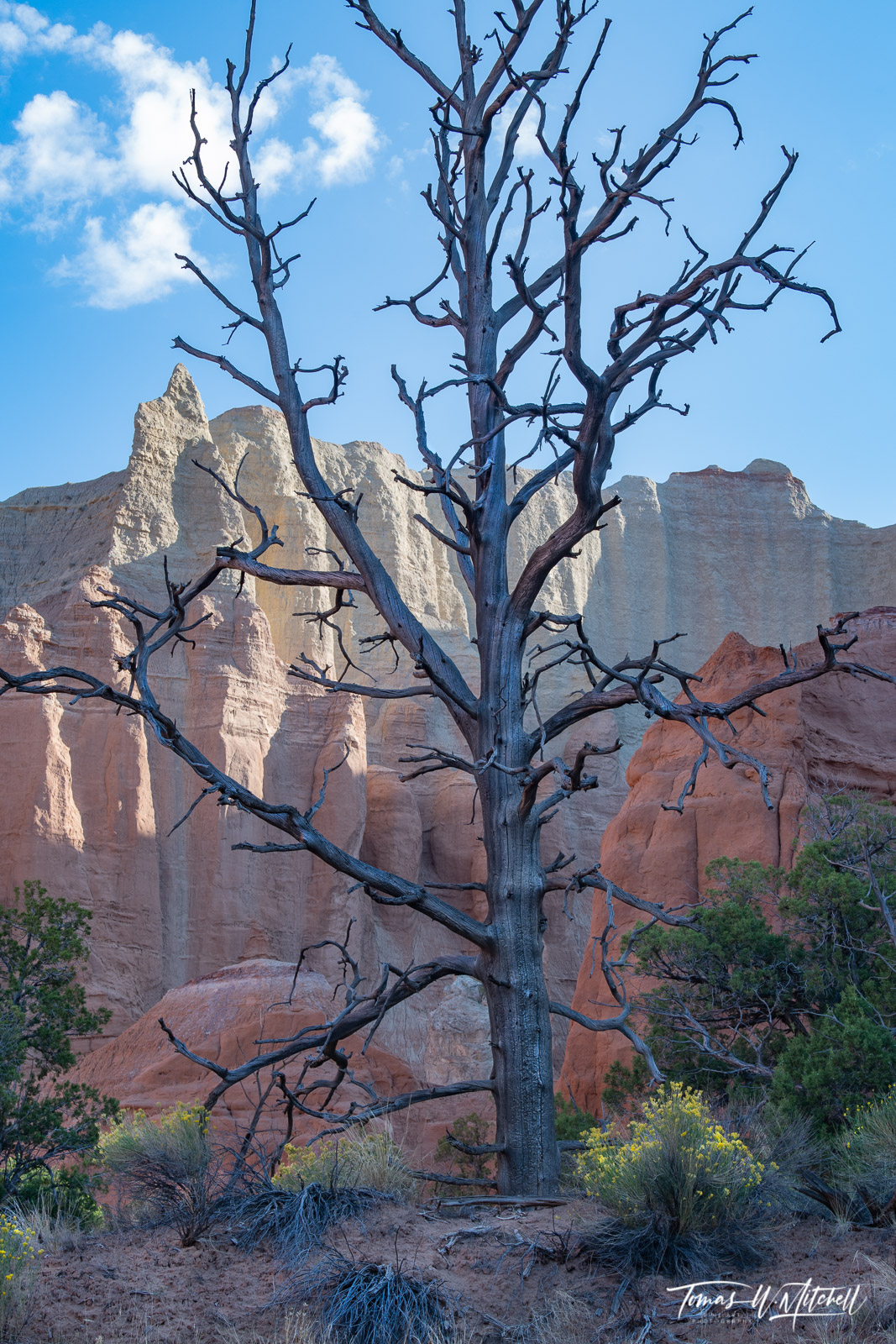
In 2023 I was the first person to camp in the new backcountry campsites that are three miles in on the Panorama Trail. I spent two nights thoroughly enjoying this spectacular park and photographing the night sky over the spires and park. It was an amazing adventure!
Here is a video of that adventure.

Cedar Breaks National Monument
My favorite National Monument in Utah is Cedar Breaks National Monument. Located east of Cedar City, Utah this monument is located on the western rim of the Colorado Plateau. Cedar Breaks is an amphitheater of eroded sandstone canyons and hoodoos that stretch three miles along the rim. An interesting feature of this monument is that it sits at 10,000 feet above sea level and can receive lots of snow in the winter. I took the images above and below on July 3, 2023, but could not do the Alpine Lake Trail because it was still buried under 6-8 feet of snow. It was over 100 degrees at our hotel in Saint George but in the monument it was 70 degrees and we needed jackets in the wind. Places like Cedar Breaks are perfect to escape the desert summer heat but they still have the red rock and colors of the desert southwest.


Hovenweep National Monument
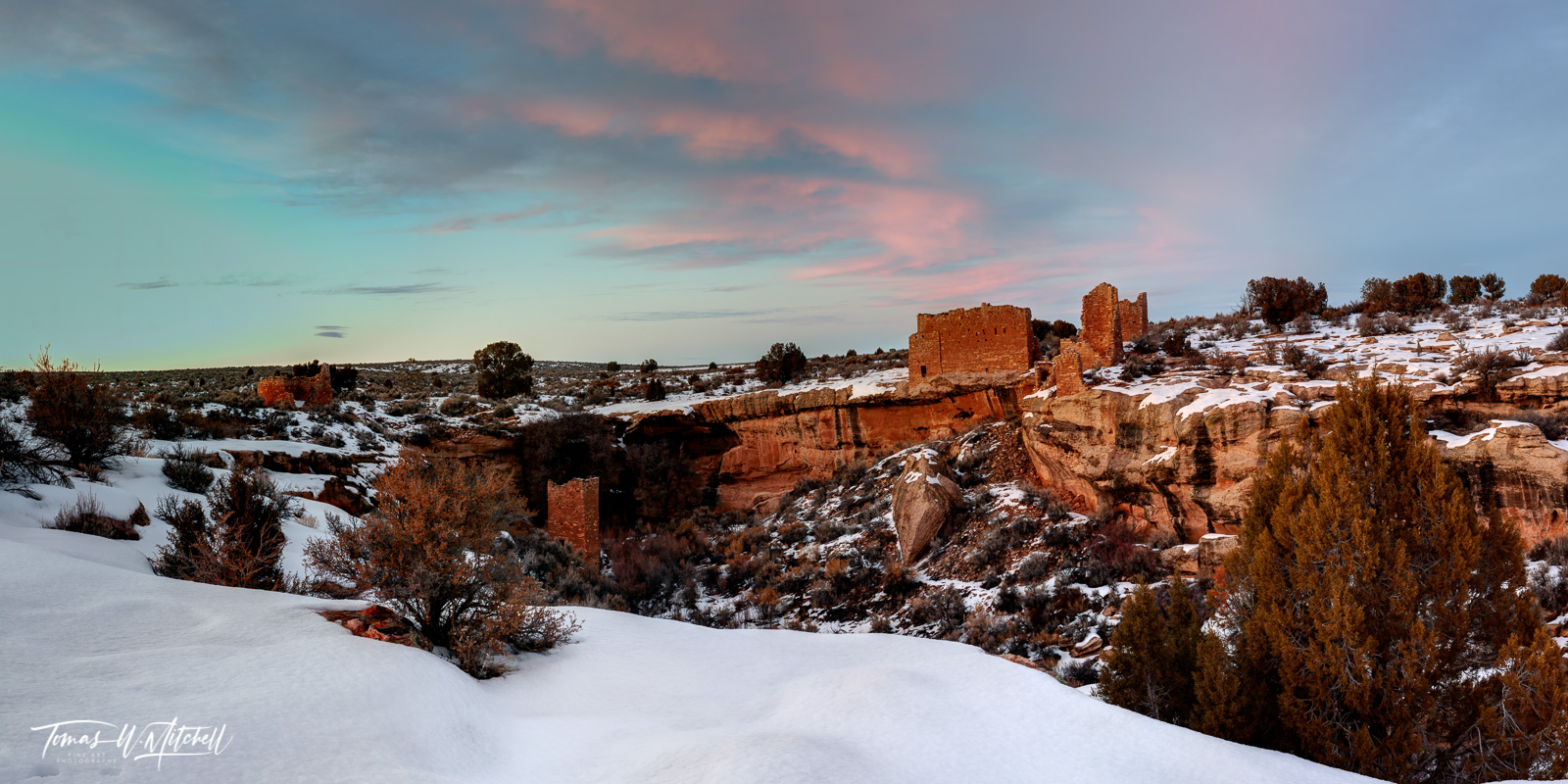
Another of my favorite national monuments Utah has to offer is Hovenweep between Blanding, Utah and Cortez, Colorado. Hovenweep is an ancient site of habitation for the Pueblo peoples who built rock buildings, towers and food storage areas all along the canyons that feed the San Juan River. Like Mesa Verde this site is intriguing and very photogenic in the right light. Look for perspectives and compositions that will show the ruins in their wild habitat of sage brush and juniper trees.
Dark Night Skies of Utah
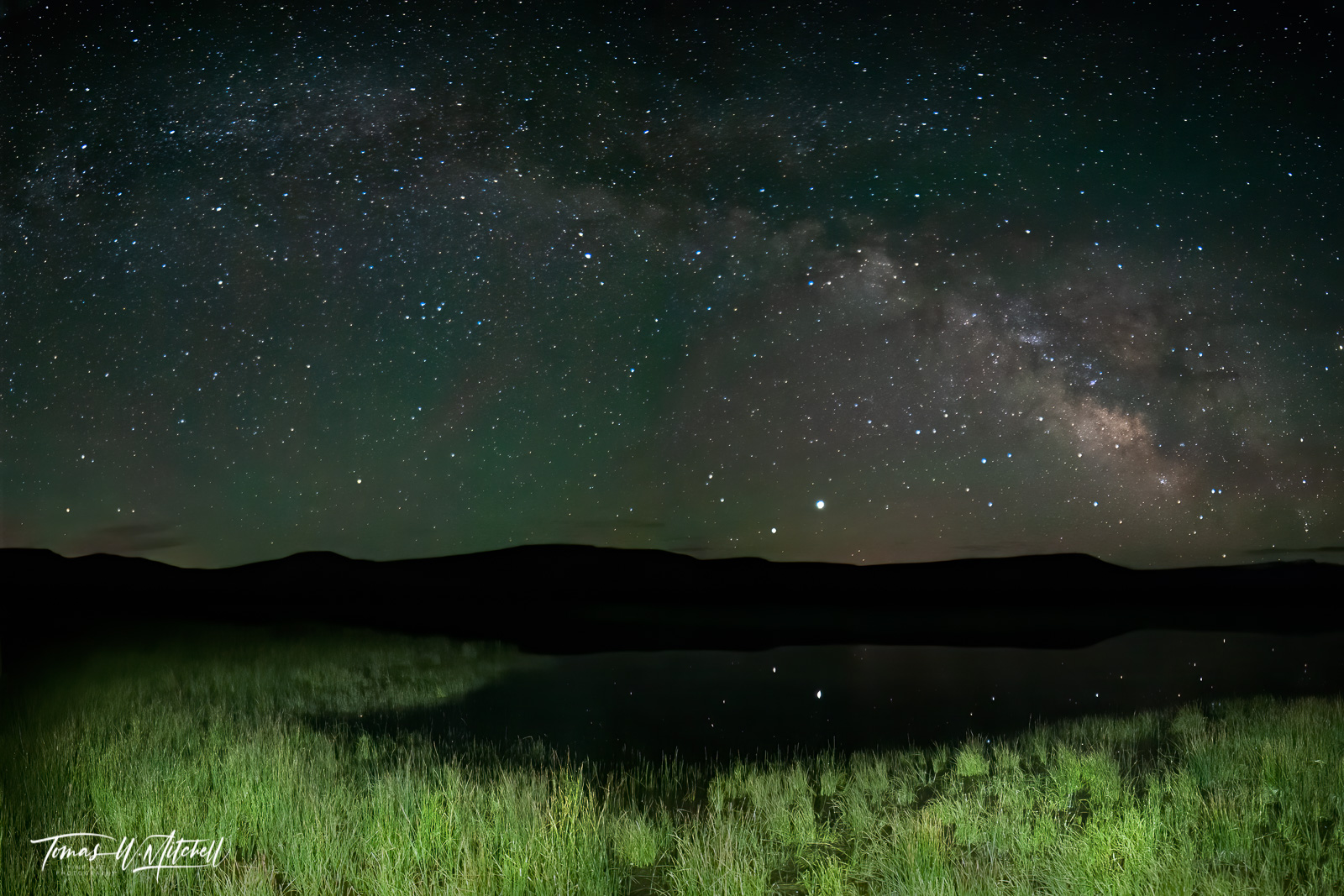
Utah has the highest concentration of certified international dark sky places in the world and some of the darkest night skies in North America. If you like photographing the night sky, Utah is the place to be.
People travel from all over North America and even the world to photograph the night skies of Utah.
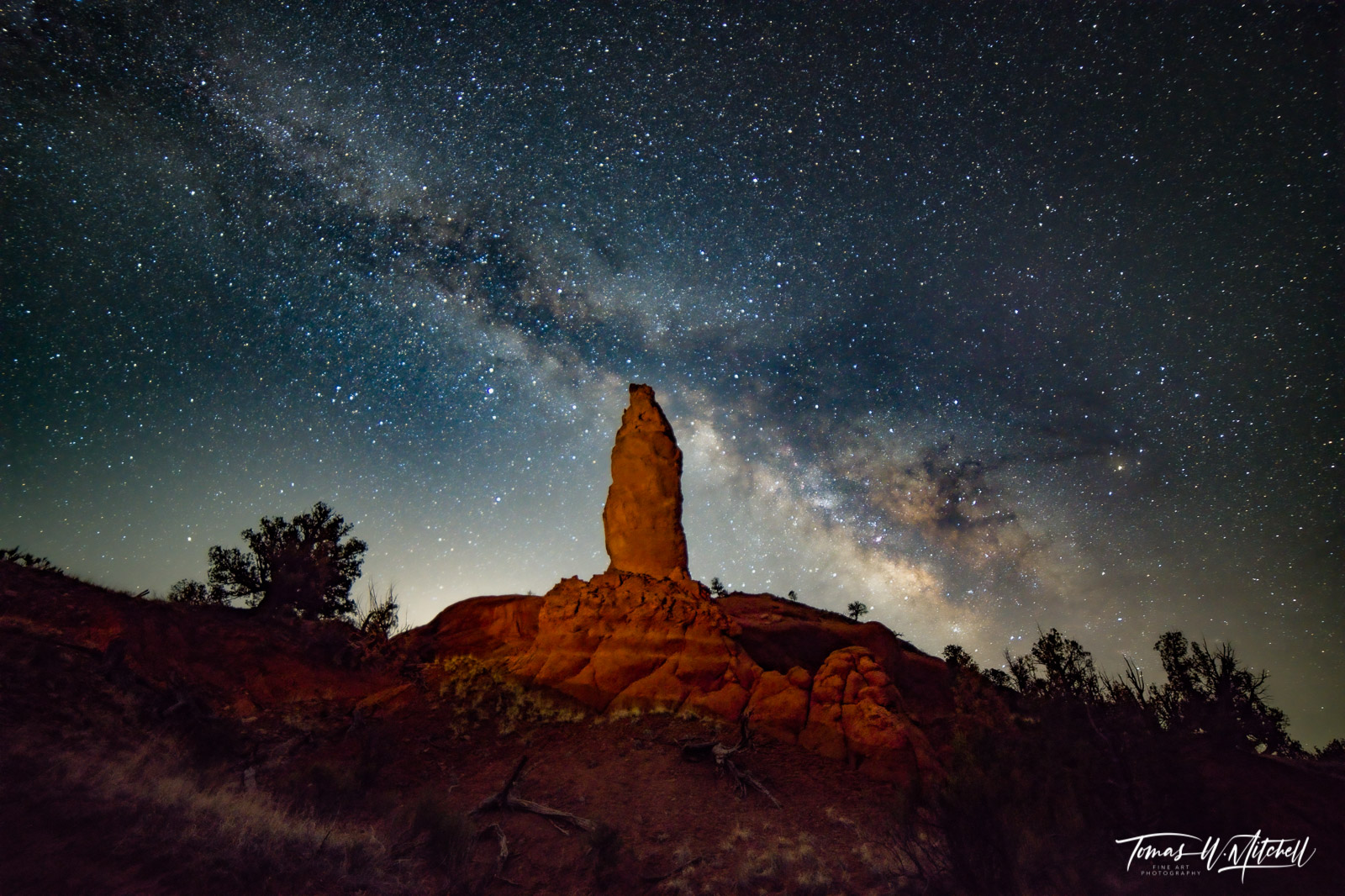
The parks and monuments of Utah offer some of the best dark sky areas with interesting desert foregrounds. This type of night sky photography is called nightscape because the landscape is included in the photograph.

You cannot talk about Utah without mentioning the Bonneville Salt Flats. Many photographers love to photograph the night sky over this natural wonder of the world; shown below with Comet Neowise in the night sky. Photographing on the Salt Flats takes preparation, timing and luck. When photographing the night sky in Utah make sure to choose nights with no moon in the sky. I also find photographing just after a storm when the clouds are all leaving can give the best atmospheric conditions.
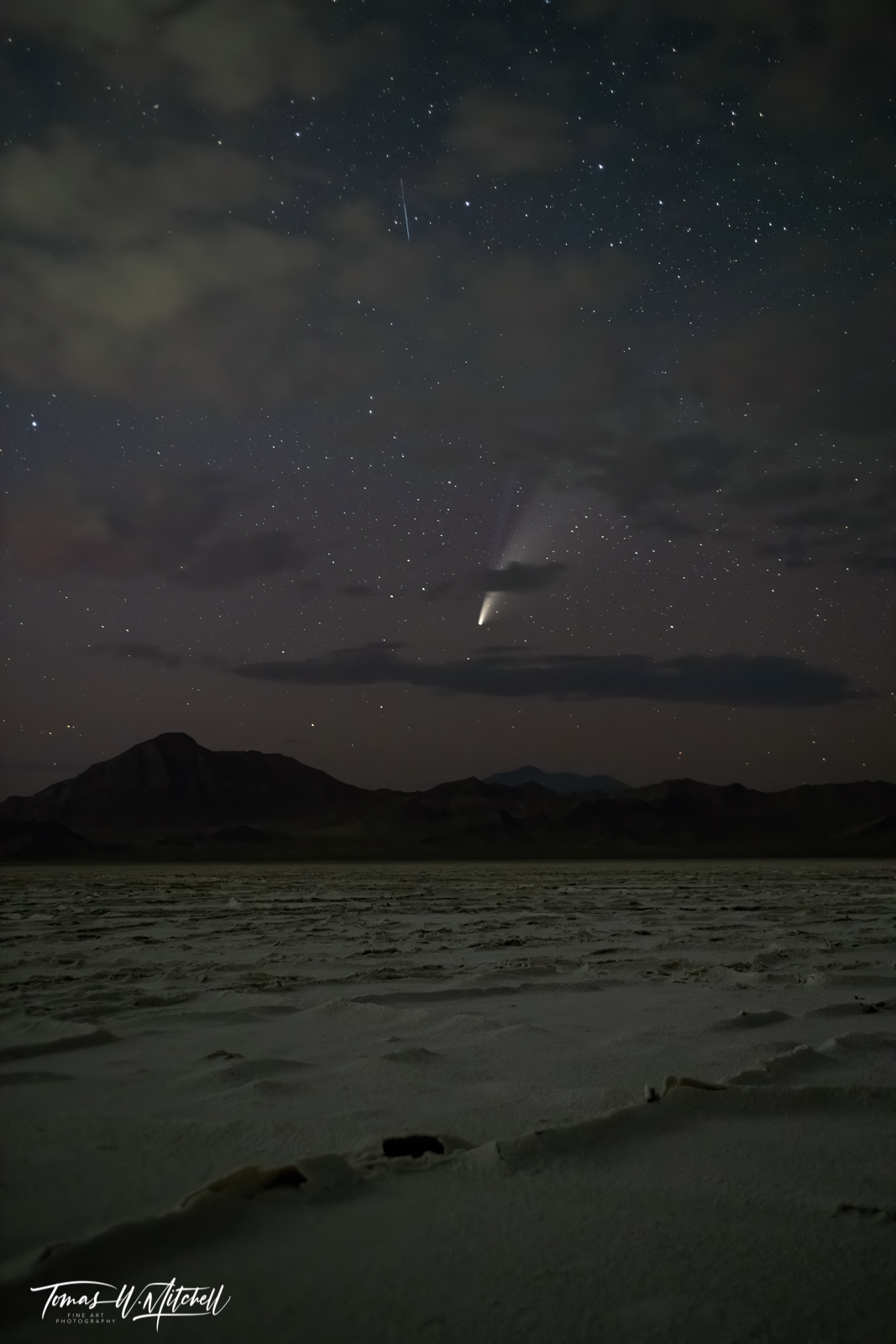
Make sure to explore the area in daylight and find the compositions you want. You can then return in the dark and setup with confidence knowing what the area looks like.

Towering Mountains and National Forests
Utah has many beautiful towering mountain ranges and peaks. From the Manti-La Sal mountains near Moab to the Uinta and Wasatch ranges of the Rocky Mountains, Utah offers many opportunities to photograph mountain peaks.
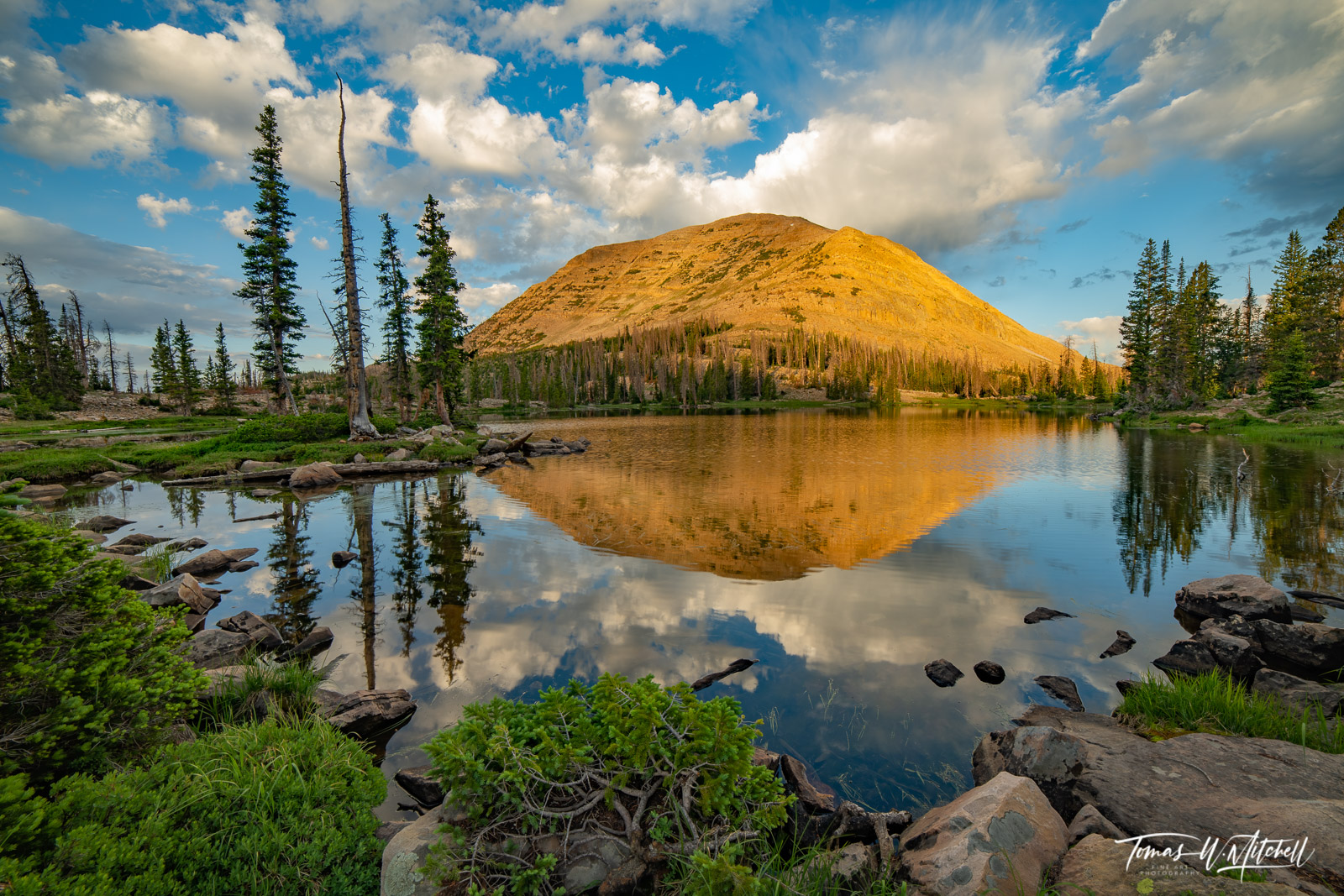
The Uinta Range is a favorite for photographers to visit and photograph snow-capped mountains and rugged wilderness. The Uintas stretch about 100 miles from west to east just south of the Utah, Wyoming border. This glacial carved mountain range has many beauties in all seasons. With peaks over 13,000 feet and many high alpine lakes, the Uinta Mountains give vast room to hike, camp, and photograph nature in all its glory.
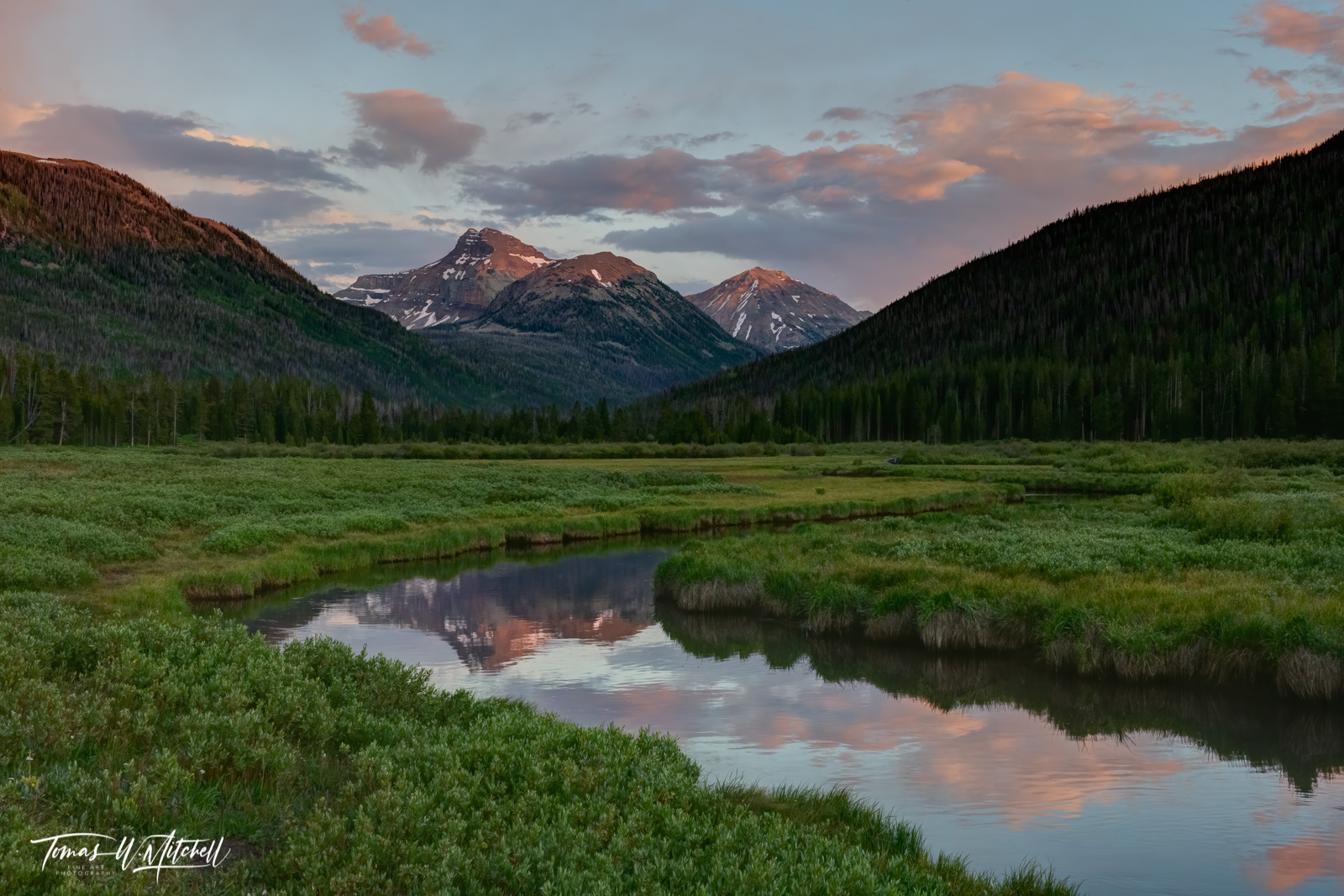
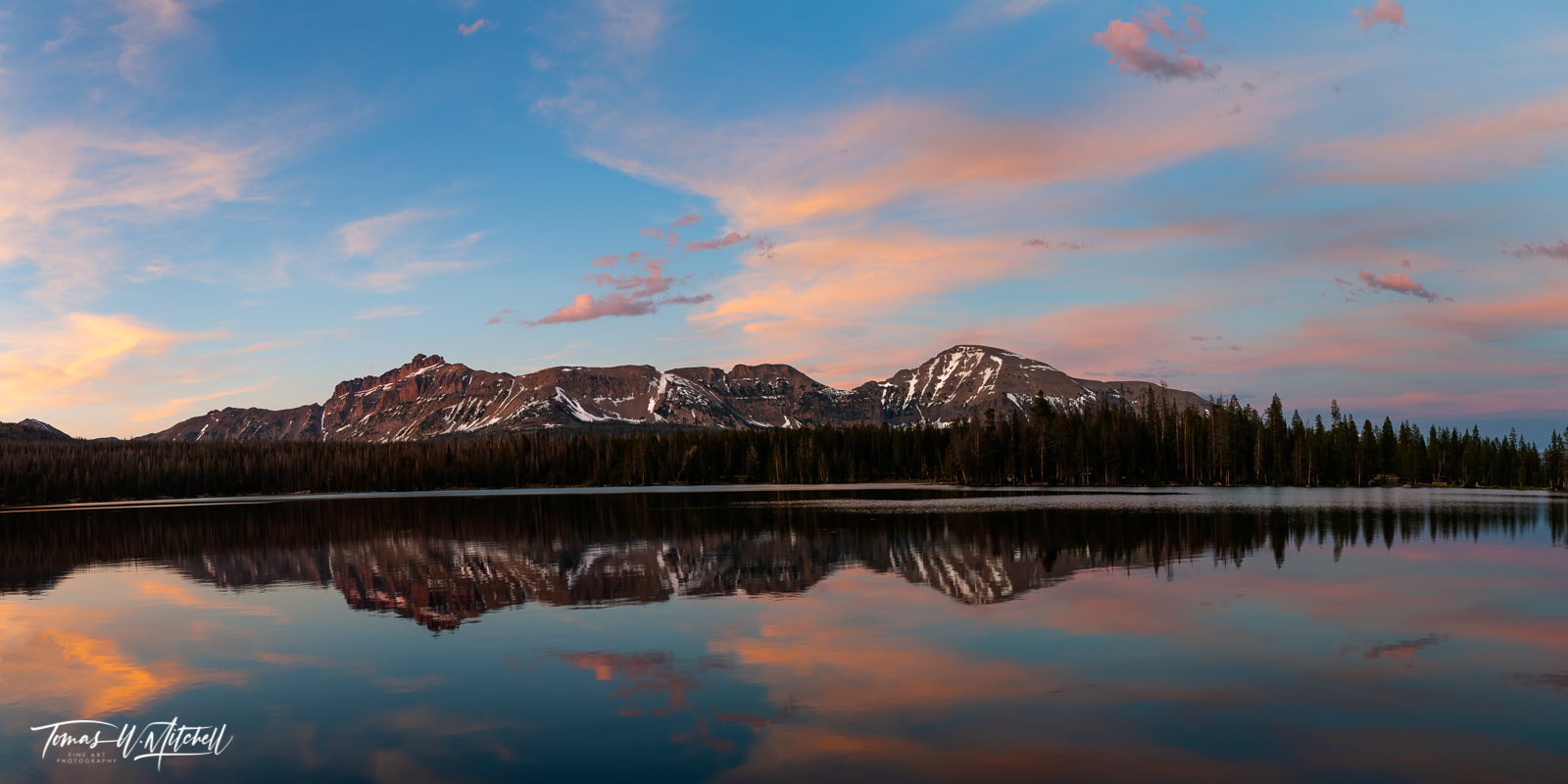
The Mirror Lake Highway, SR 150, is a beautiful drive that crosses over the western end of the Uinta Mountains from Evanston, Wyoming to Kamas, Utah. This drive is open from early summer through late autumn and has many lakes and views worthy to photograph. Make sure to stop at Mirror Lake pictured below and walk around the lake, smell the mountain air and enjoy the wilderness.
Here is a video of one of my adventures camping and photographing in the Uinta Mountains of Utah.
The Wasatch Mountains are the western edge of the Rocky Mountains and run from Northern to Central Utah along the Interstate 15 corridor. The proximity of these mountains to the population center of Utah creates a perfect scenario for photographers who do not want to travel far to see towering peaks.

Autumn in Utah
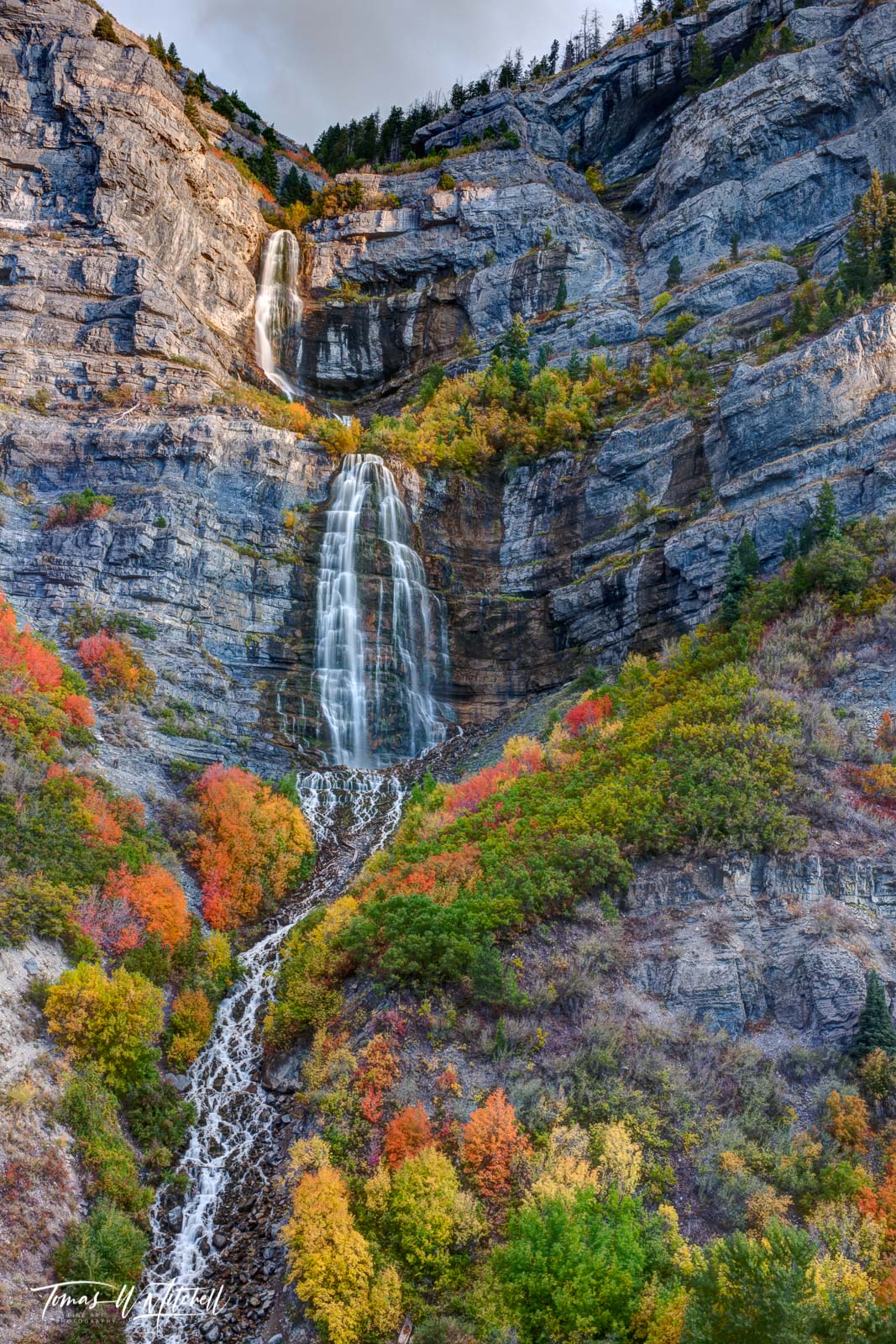
One of the most photographed features of the Wasatch Mountains is Bridal Veil Falls pictured above. Just off US Highway 189 in Provo Canyon it has easy access and walking paths to the base of the falls.

Mount Nebo is the tallest peak in the Wasatch Range and driving the Mount Nebo Scenic Byway is another drive every photographer should take. This road goes from Payson to Nephi Canyon and is one of the premier drives in the USA especially in Autumn. There are numerous pullouts on this road that give sweeping views of Mount Nebo and Utah Valley.
You cannot photograph Utah without seeing the state in the fall. Autumn in Utah can give some of the most vibrant colors and scenes anywhere, and will not disappoint if you take the time.
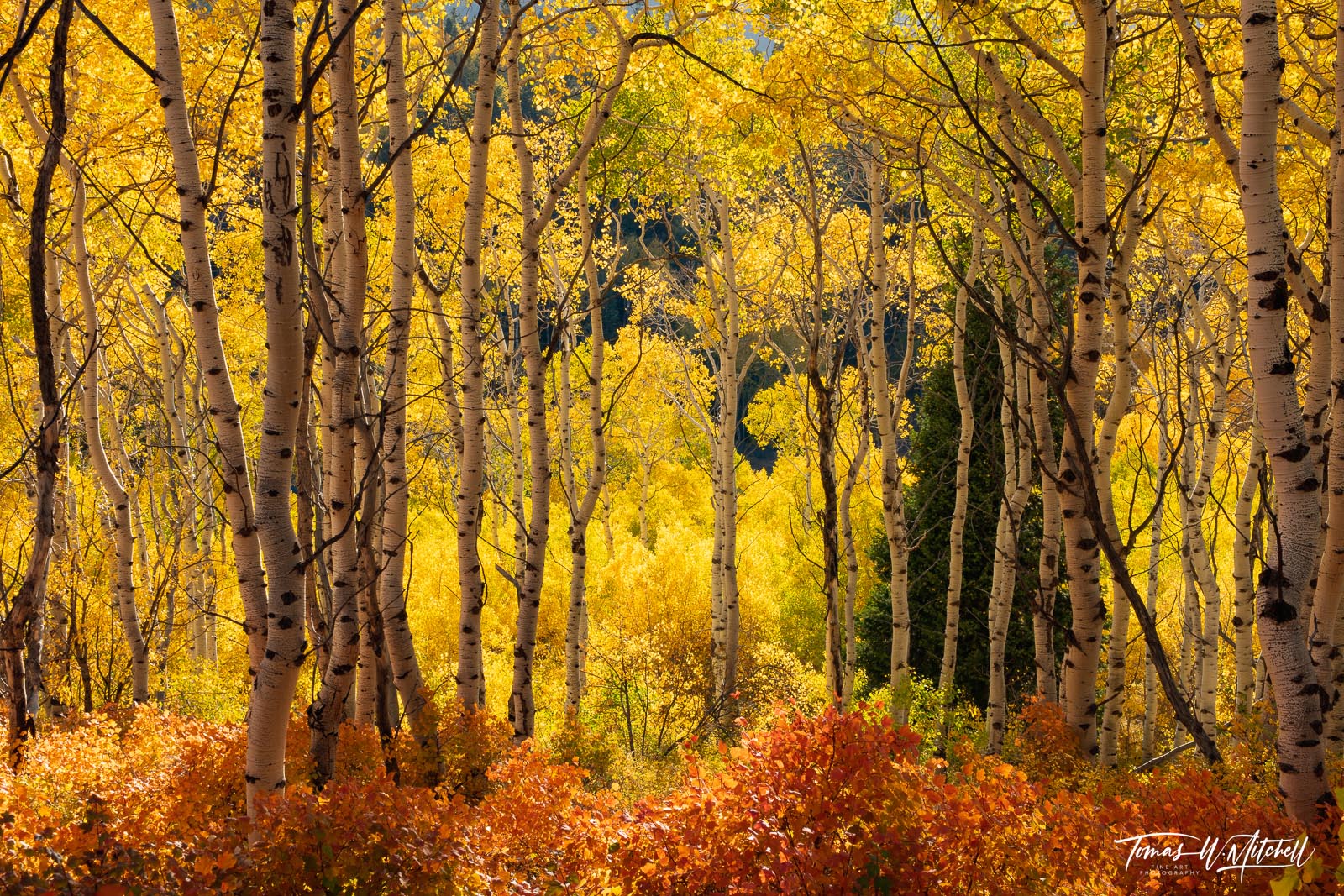
Autumn colors start with the maples in Utah and by mid-September they can be very vibrant. The quaking aspen trees really begin to peak by the end of September and can linger into October with forests glowing yellow in the evening light. Cottonwood trees and river birch along the rivers and streams change to golden yellow in October and November and the further south you go the longer autumn lasts.


Watch for changing temperatures and incoming storms because colors can change quickly and be gone in a few days if a major storm hits.
Utah's Wildlife
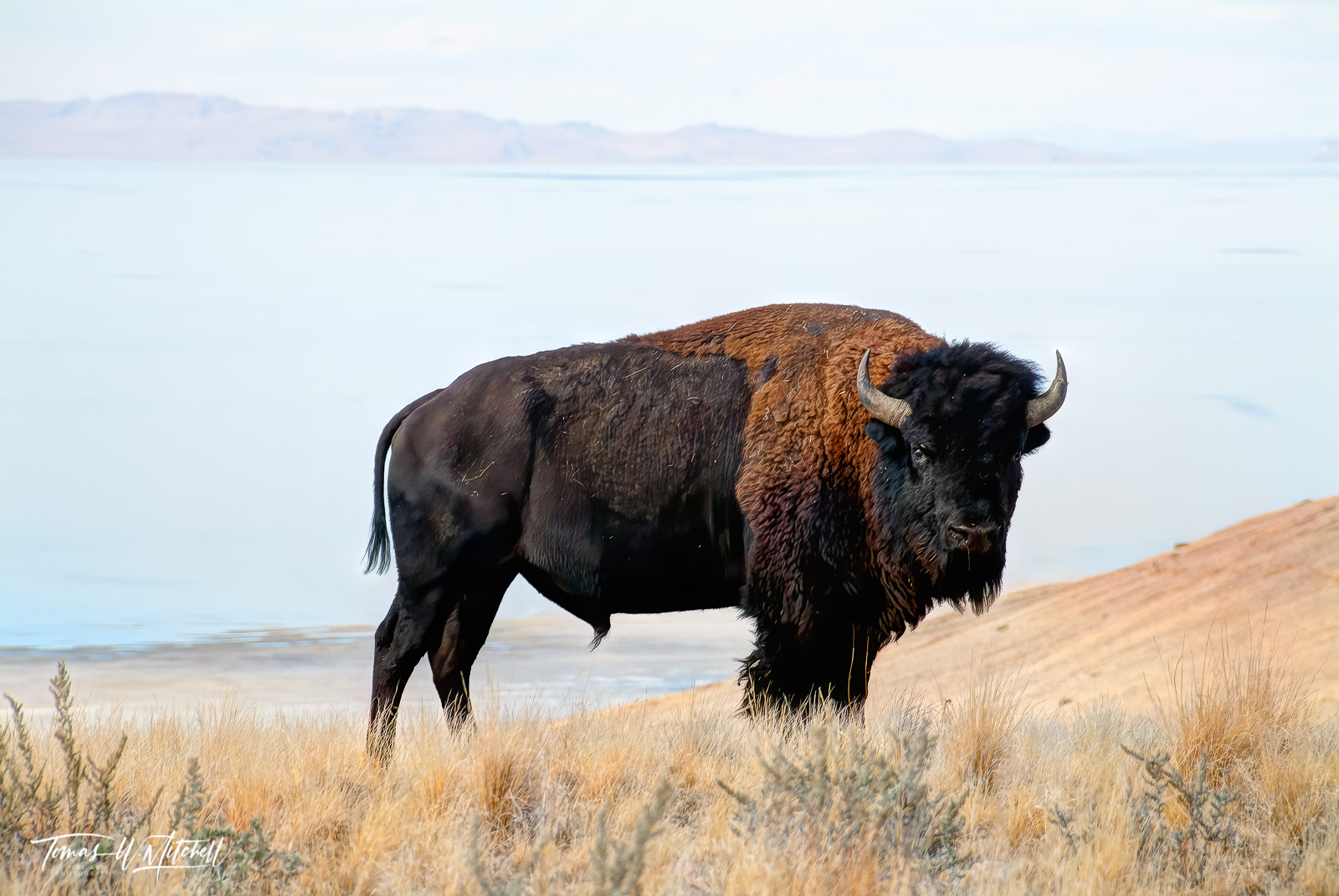
Utah has abundant wildlife to photograph. Most photographers head to Antelope Island State Park in the Great Salt Lake to find wildlife. Bison are plentiful on the island but you can also find deer, bighorn sheep, antelope, fox, coyotes, and many birds.
The Bear River Migratory Bird Refuge near Brigham City, Utah is one of the best places in the state to photograph birds. You can drive the causeway and from inside your vehicle capture many photographs of migratory birds that visit Utah.
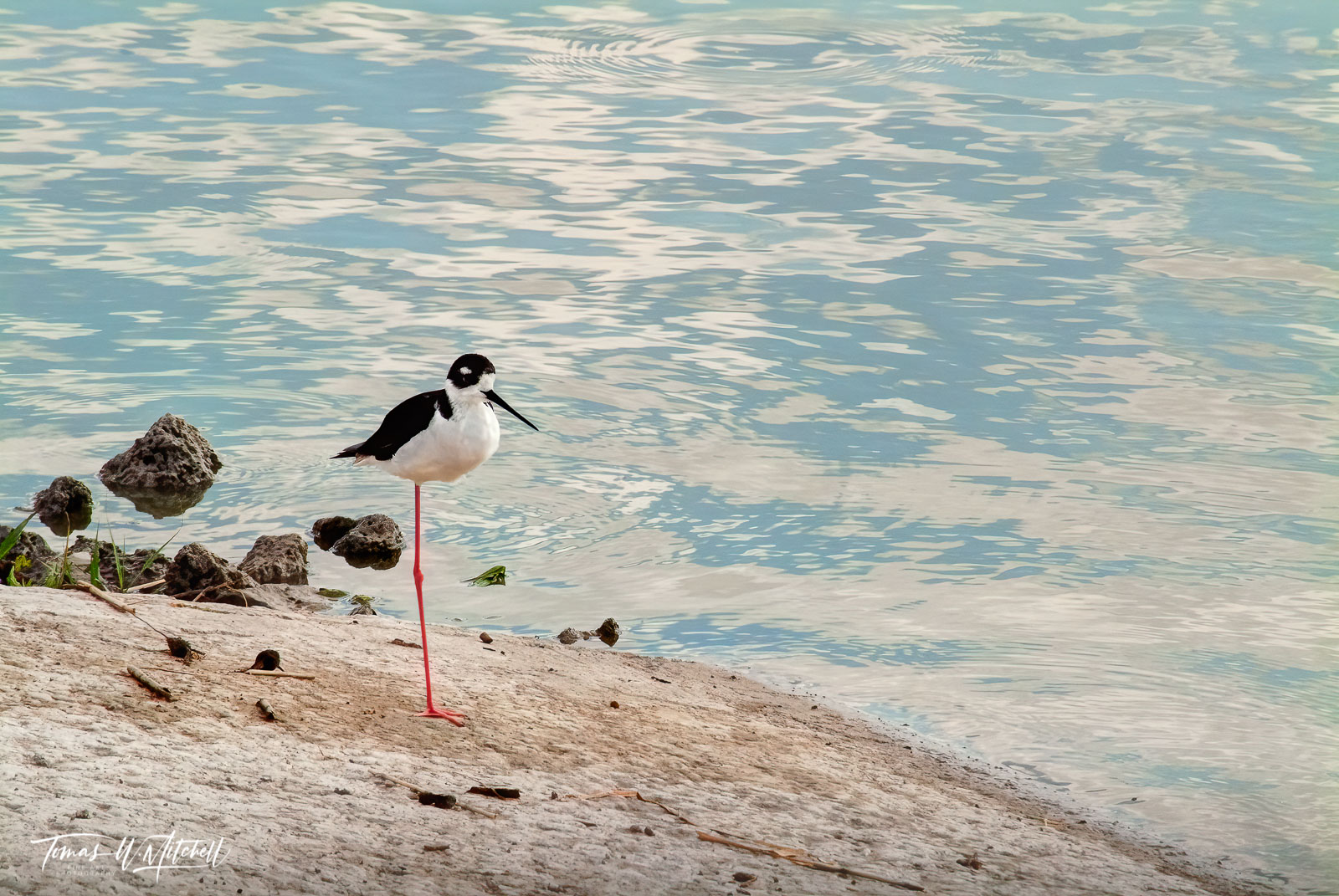
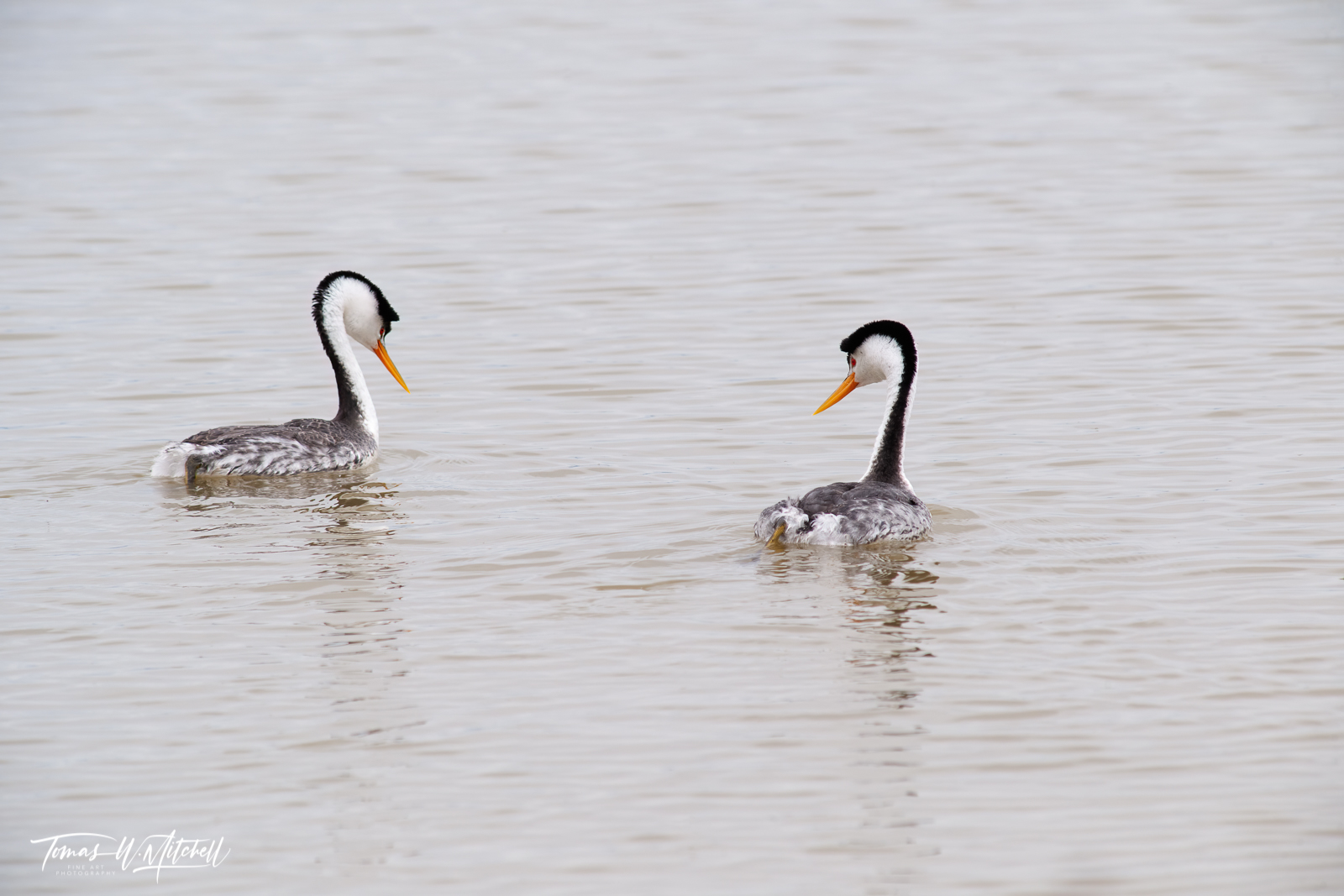
The Bear River Migratory Bird Refuge is one of my favorite places to go when I want to photograph birds. Make sure to take a telephoto zoom lens. I prefer my 150mm-600mm so I can bring subjects in close if needed. I also like to set my ISO on auto so I can set the lens aperture and shutter speed to what I need and let the camera meter do the rest.
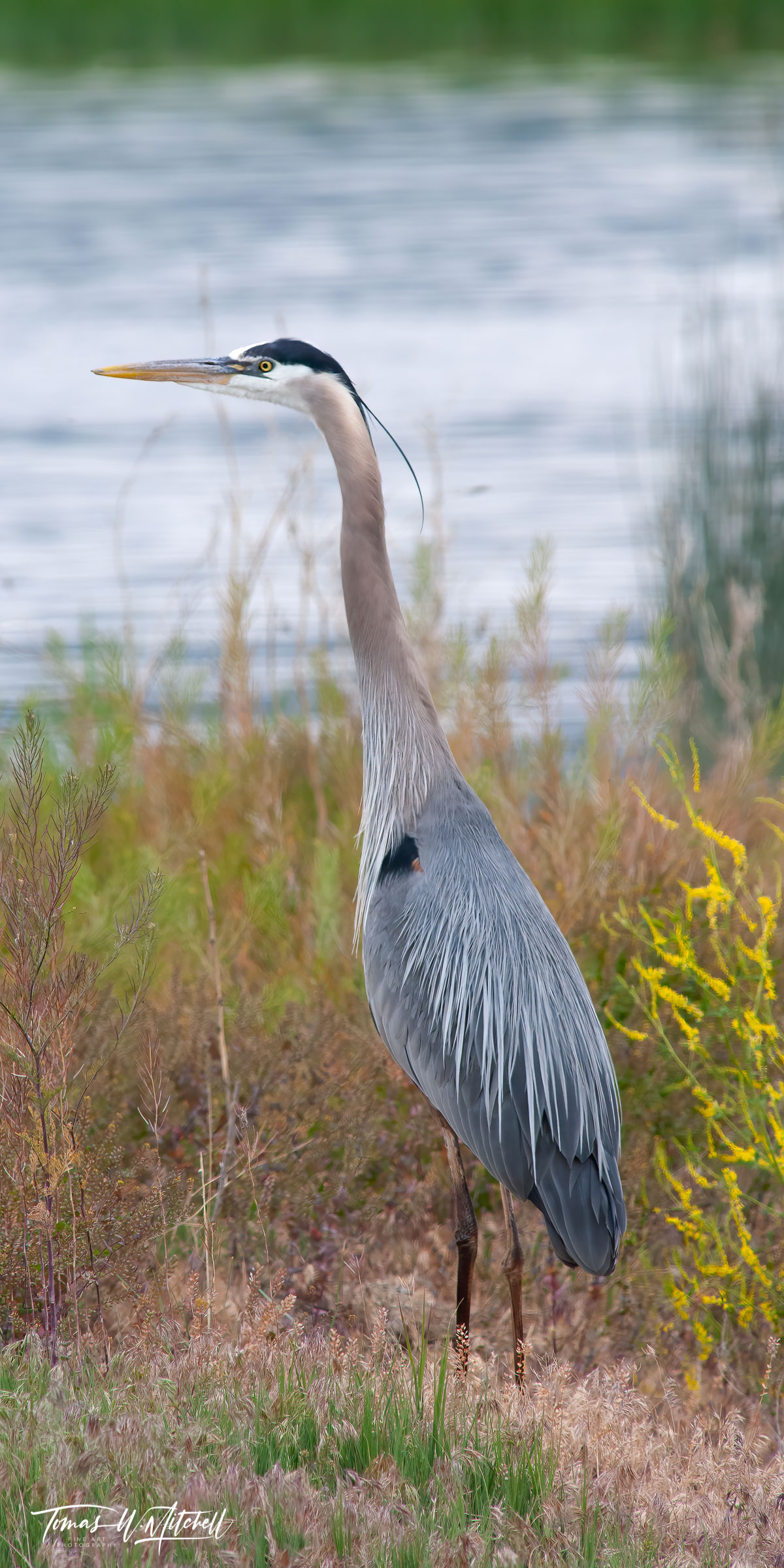
There are plenty of other places in Utah you can find wildlife, from wild horses to mountain goats, bighorn sheep, deer, elk, moose, fox and weasels, if you are patient and willing to hike you can find many wild animals to photograph.
I captured the image below of a mountain goat on Mount Timpanogos. This mountain is a very popular place to hike in Utah and you can almost always find mountain goats, moose and deer on this hike.
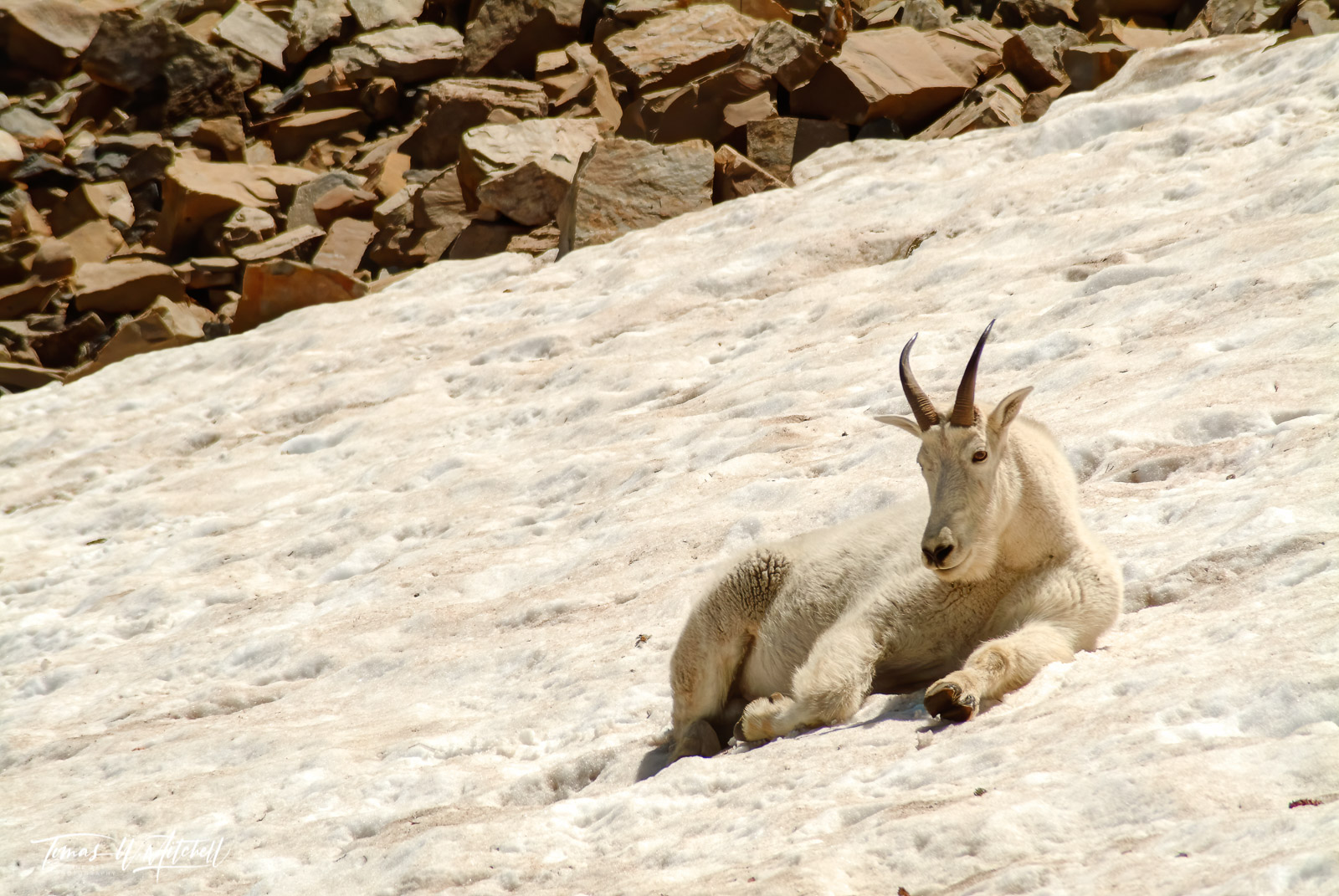
One of the tricks to capturing great wildlife images is to learn to be quick. You will only have a fleeting chance to take a great photograph because animals do not hold still. So have your camera settings ready and learn to be ready when the animals appear.
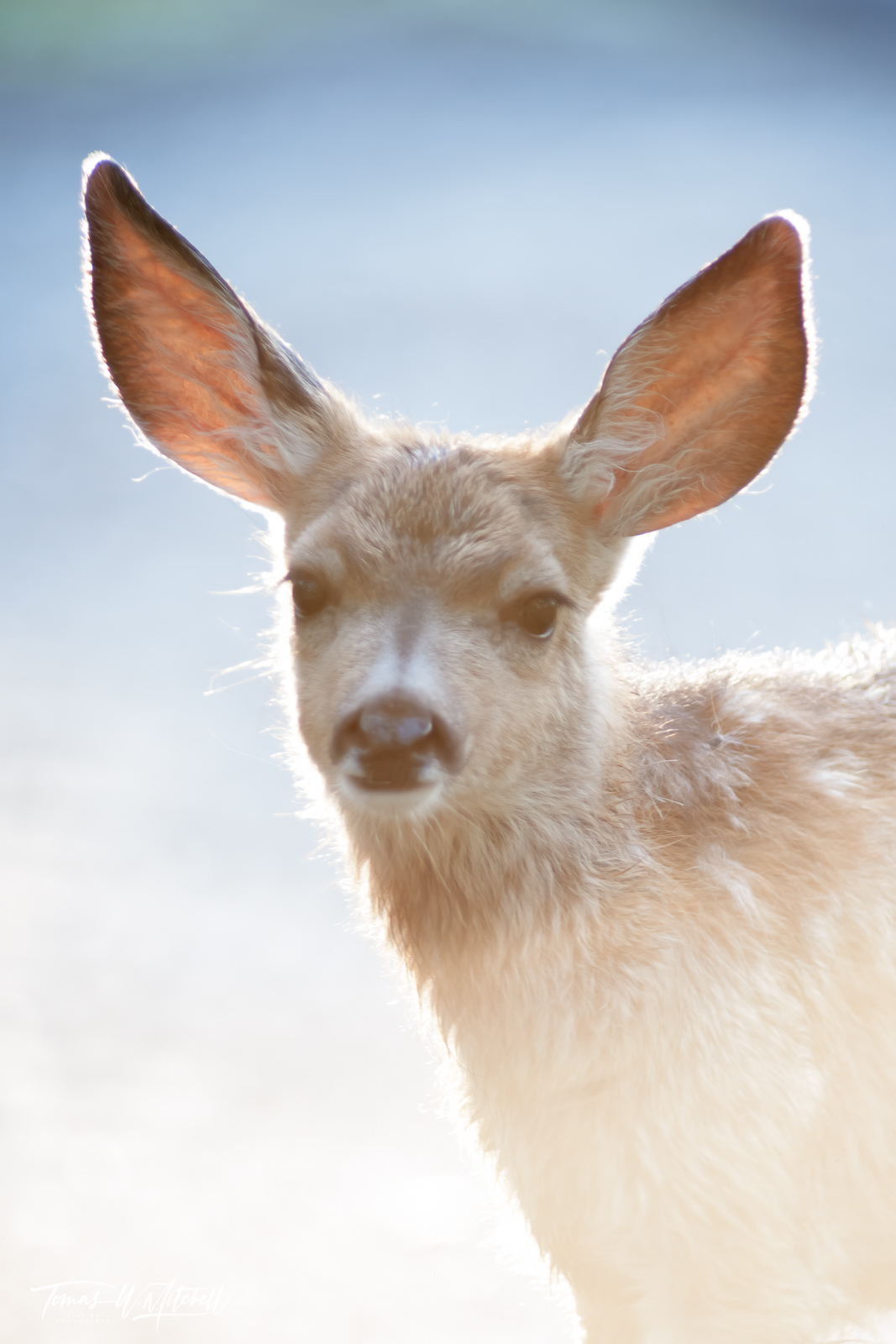
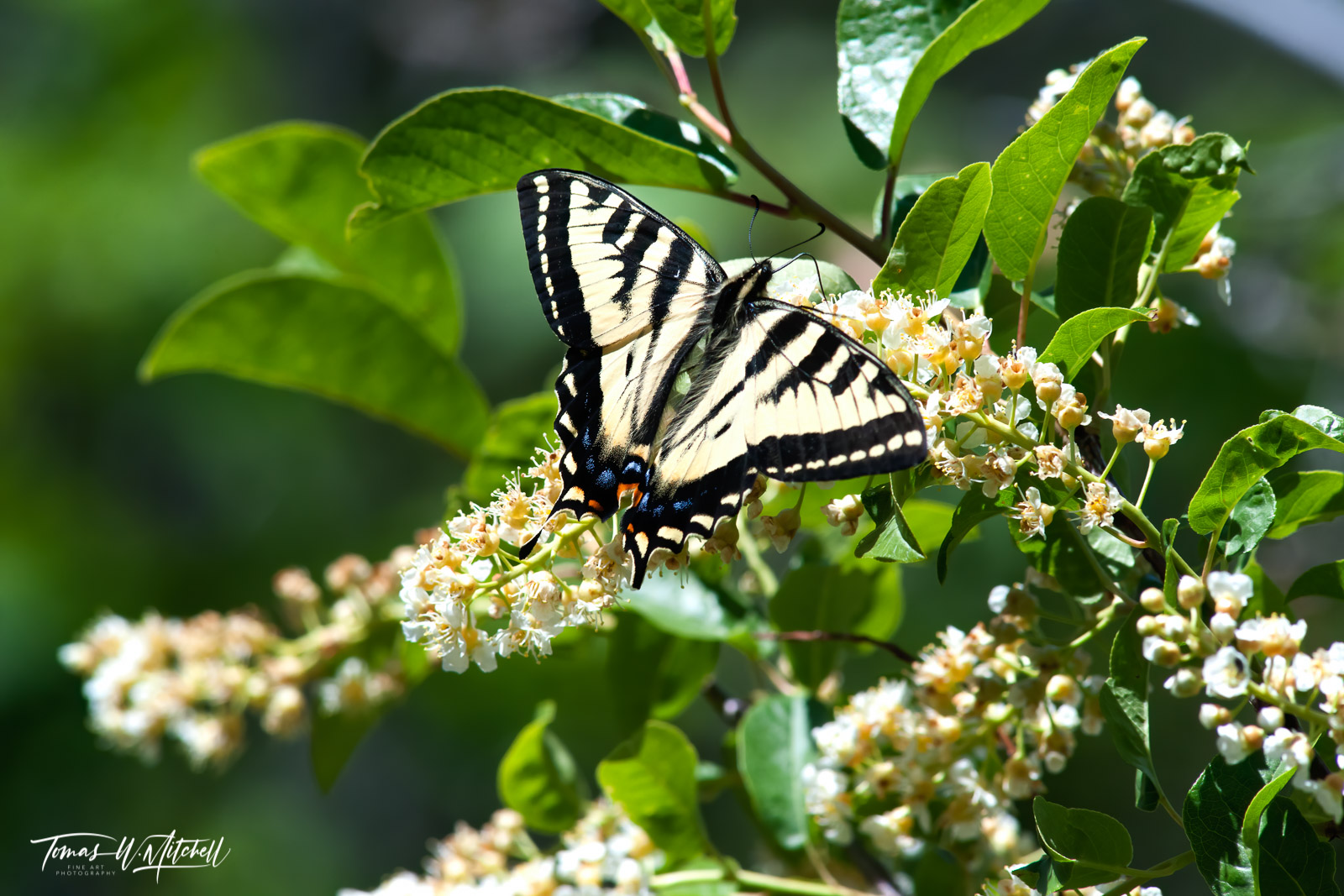
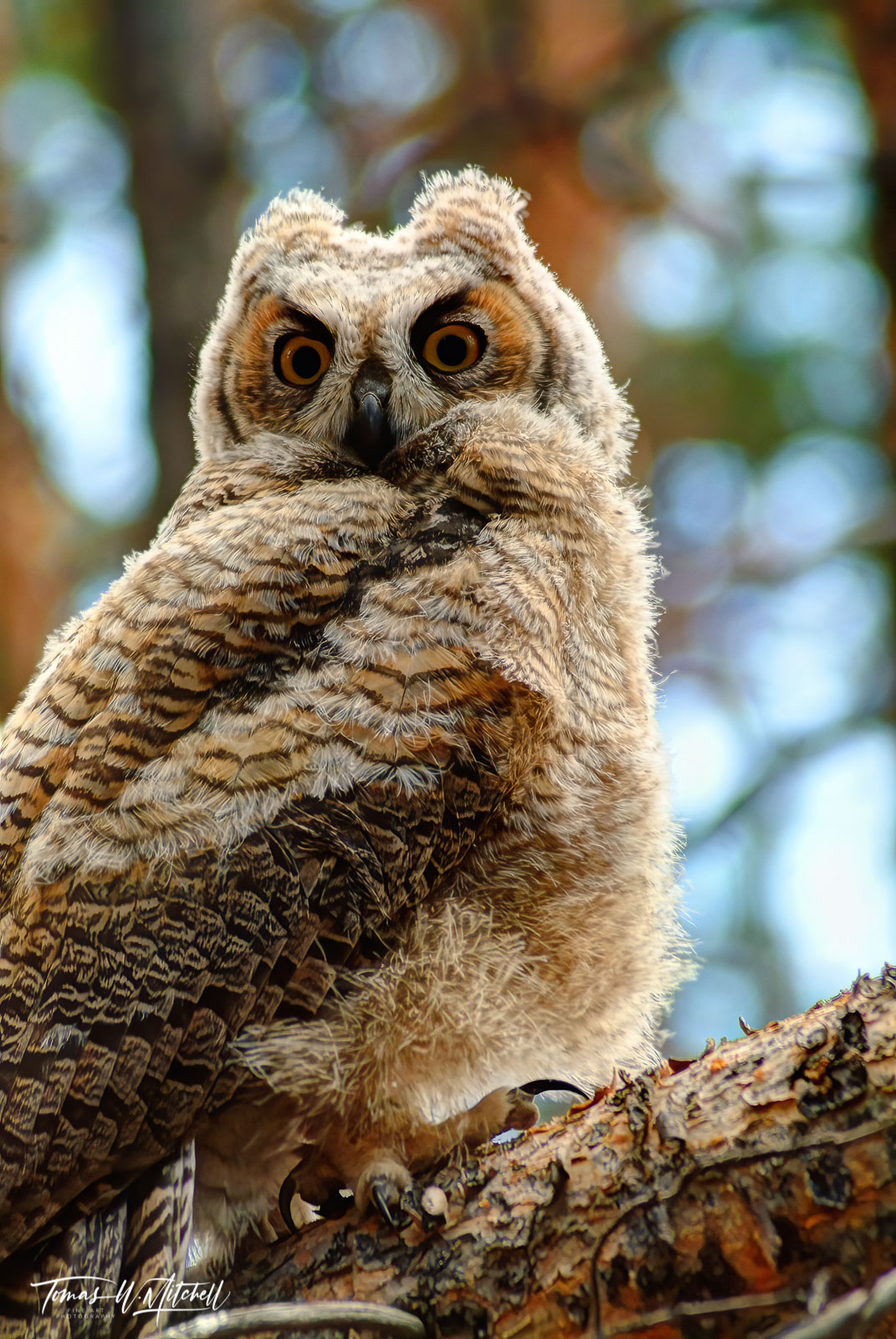
Another trick to getting great wildlife photographs is to not be afraid to ask around. Many times locals will know where the animals are hanging out and simply asking for advice can be very rewarding. For the image below I was told by some Boy Scouts that these young owls were in the area, so I explored and found them!
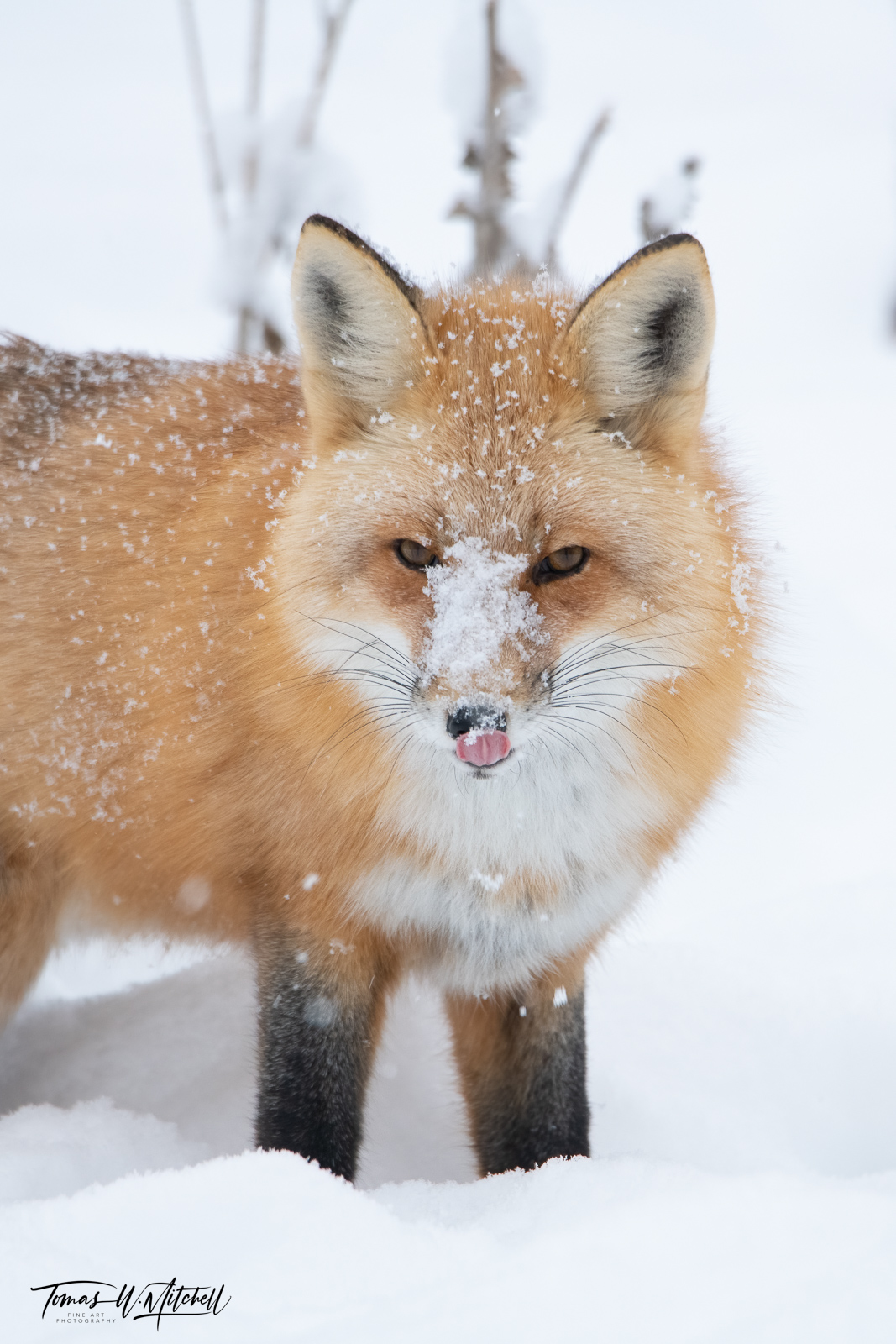
You often do not even need to go far from home to capture wildlife photographs. Many animals have adapted to living close to humans and can be found in city parks and open spaces. I photographed the fox below in a park in the Salt Lake City area that is surrounded by urban sprawl. Ask around and explore your local parks and open areas, you might be surprised what you find.
Here is a video on ISO and photographing the fox in the image below.
Winter in Utah

Utah is known for the greatest snow on earth and the many ski resorts attest to it. If you want snowy winter pictures, Utah is the place to visit in the season.

Photographing winter in Utah is about watching for storms and being ready to get out and be in the weather.
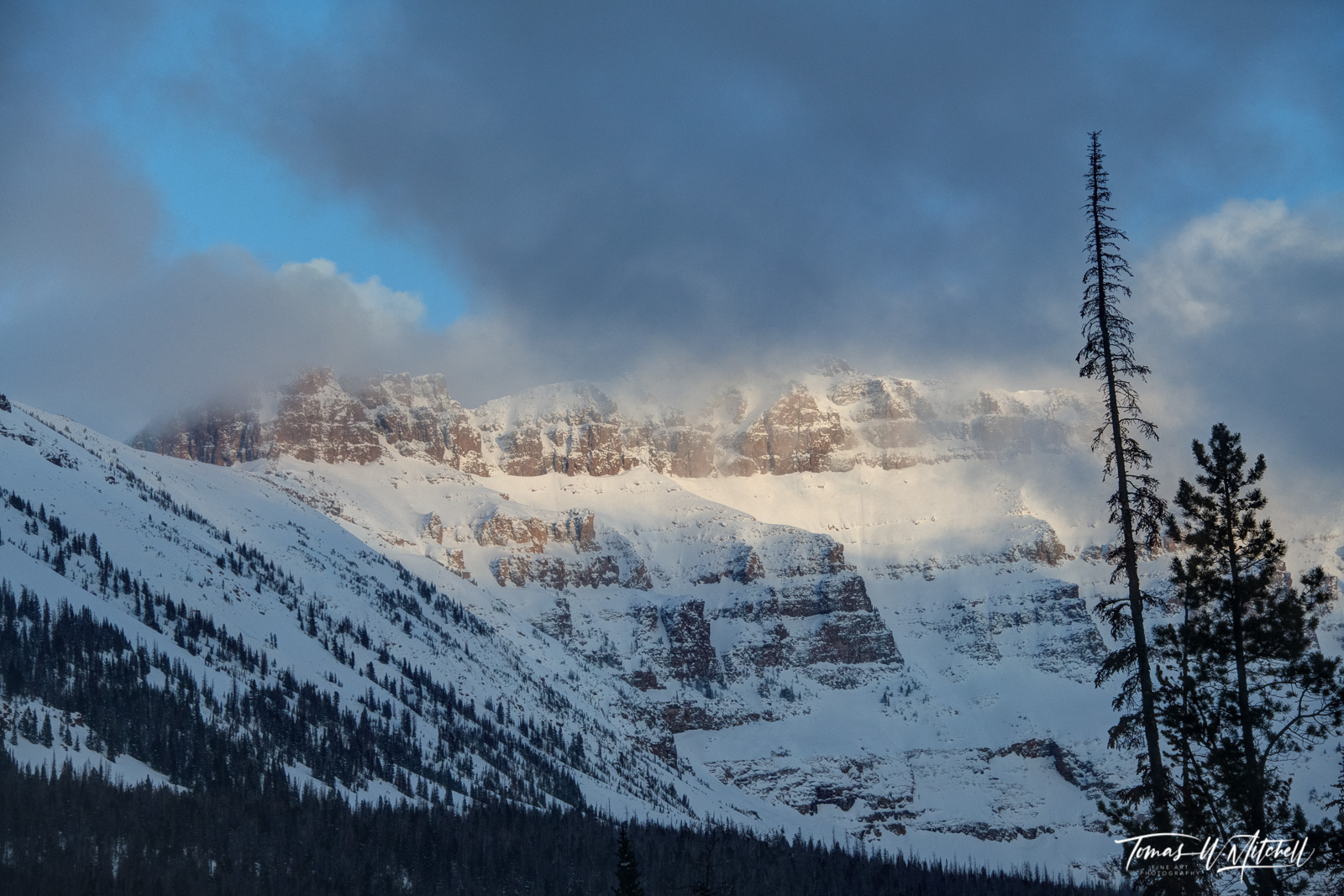
I skied in the backcountry up the Alpine Loop in American Fork Canyon. My plans were to stay the night camping but things do not always workout like we plan. I did get the image above from the adventure.
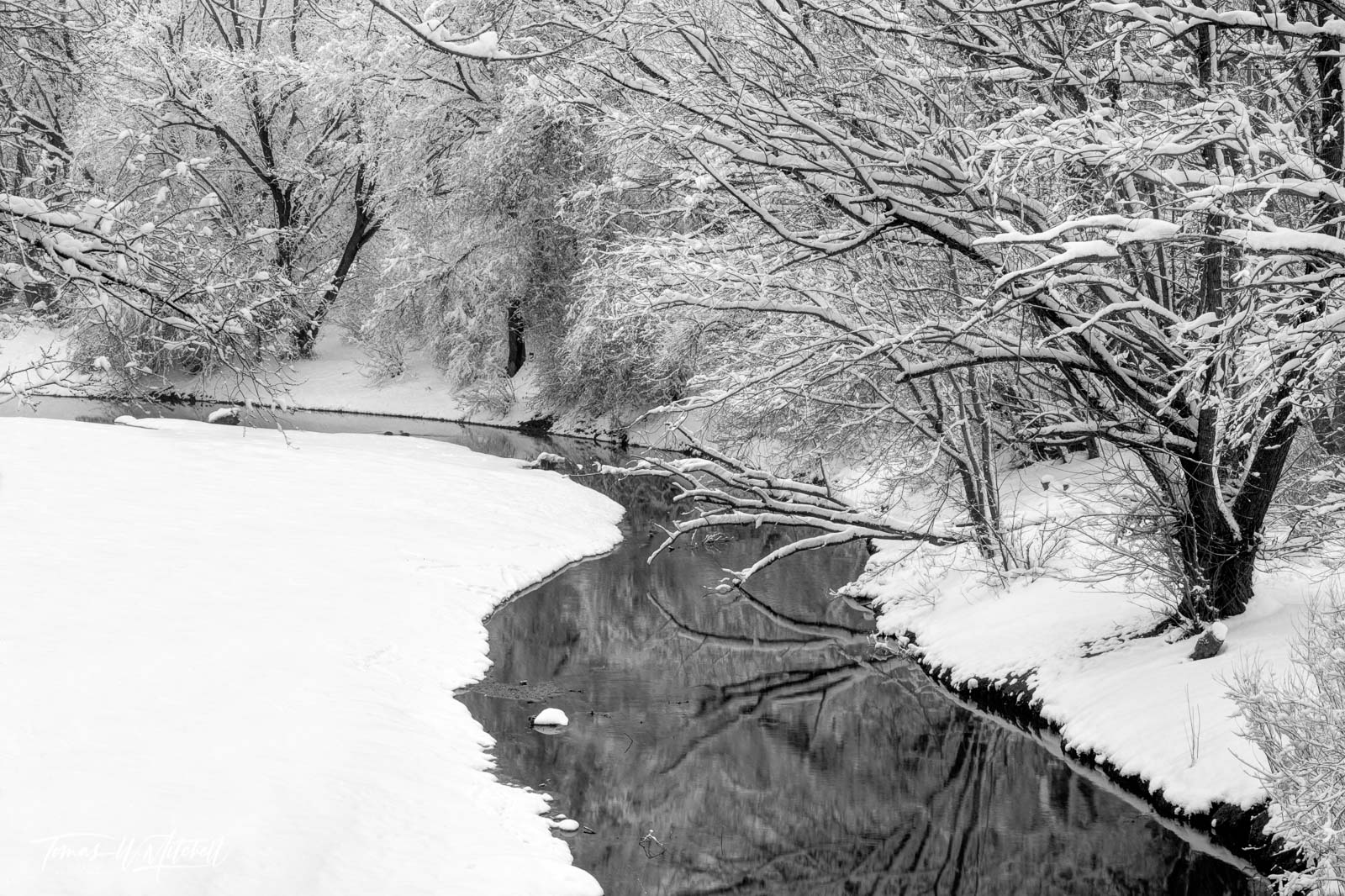
I took the photograph below on the Mirror Lake Highway in late March. We spent two nights at the Bear River Lodge and Cabins and rented a UTV with cat tracks. We drove all the way to Mirror Lake and snow shoed around the lake. It was a magical winter adventure!
Here is a video.
Nothing beats walking in a winter wonderland and if you are willing to take your camera gear and explore you can find a whole new world to photograph.
Utah has so much to offer for the outdoor nature and wildlife photographer. You can be photographing snow covered peaks in the morning and in the evening be standing in a red rock desert taking pictures of the grandeur of national parks. You can find wildlife with ease and vast forests of autumn gold. Utah has something for every landscape photographer including dark starry skies and endless vistas.
If you want a guide contact me, I would be more than happy to show you around!
Happy Trails!